
Research & Publications

First/Corresponding-Author Articles

Simulating the formation of multiple populations in globular clusters

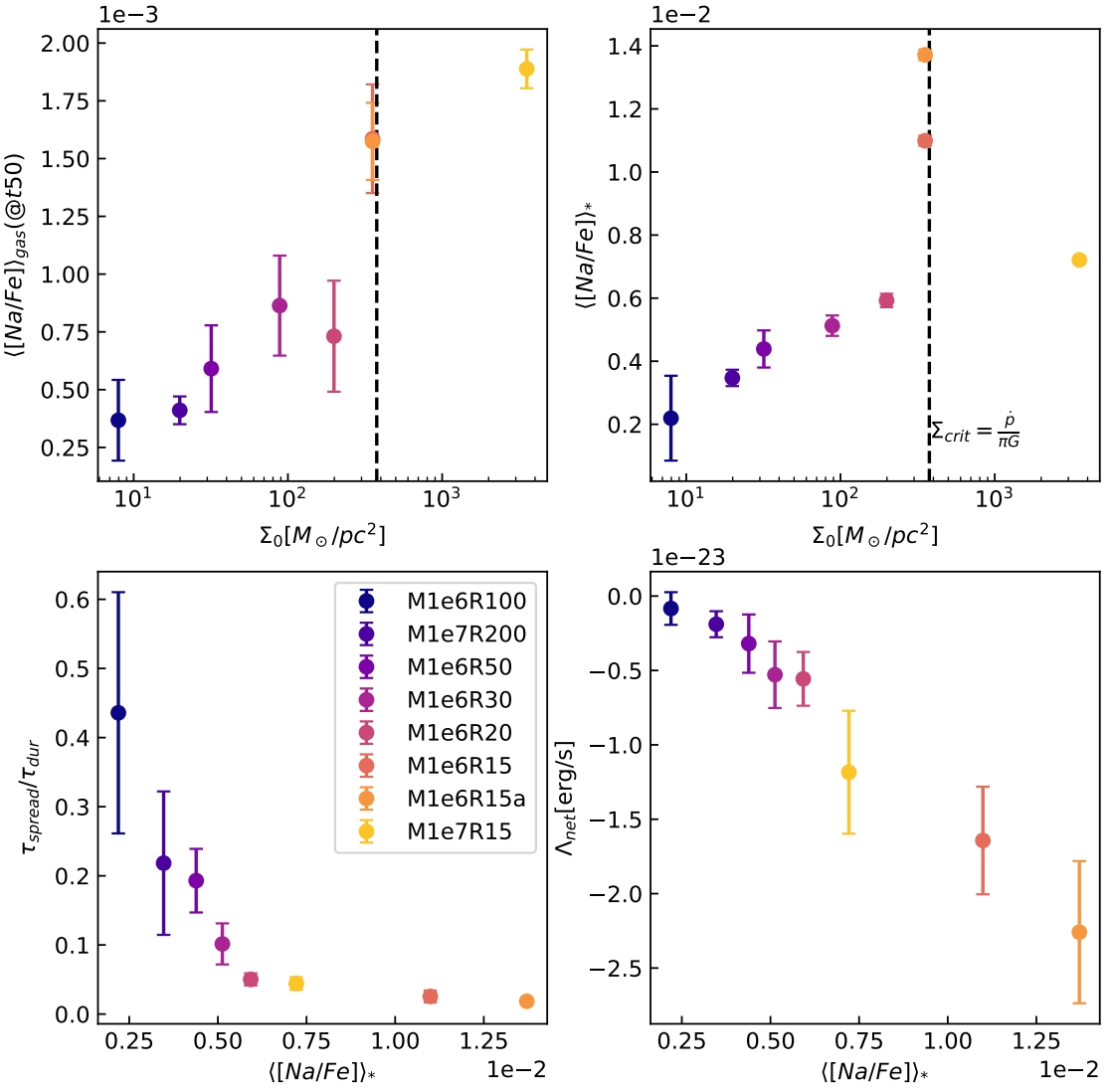
I have implemented a pre-supernova binary yield model into the hydrodynamical code AREPO-RIGEL, carried out a suite of giant molecular cloud simulations with varying initial masses and radii, and analyzed the chemical and dynamical evolution of second-generation material. These simulations revealed a fundamental “time budget” problem: the mismatch between the timing of pollutant release, mixing, and star formation strongly limits the 2P/1P ratio, reaching at most ~6% in isolated GMCs. This finding suggests that isolated star formation and stellar feedback cannot reproduce the observed MPs, motivating us to propose cloud–cloud collisions or shock-driven star formation as promising alternative scenarios. Our work also proved that MP formation is not a simple linear mixing problem, but a complex one linked to the GMC’s energy cycle, phase transitions, and turbulent evolution. This work is supervised by Hui Li of Tsinghua University and Baitian Tang, Long Wang and Liubin Pan of Sun Yat-sen University. For more details please click "in Prep." button below.
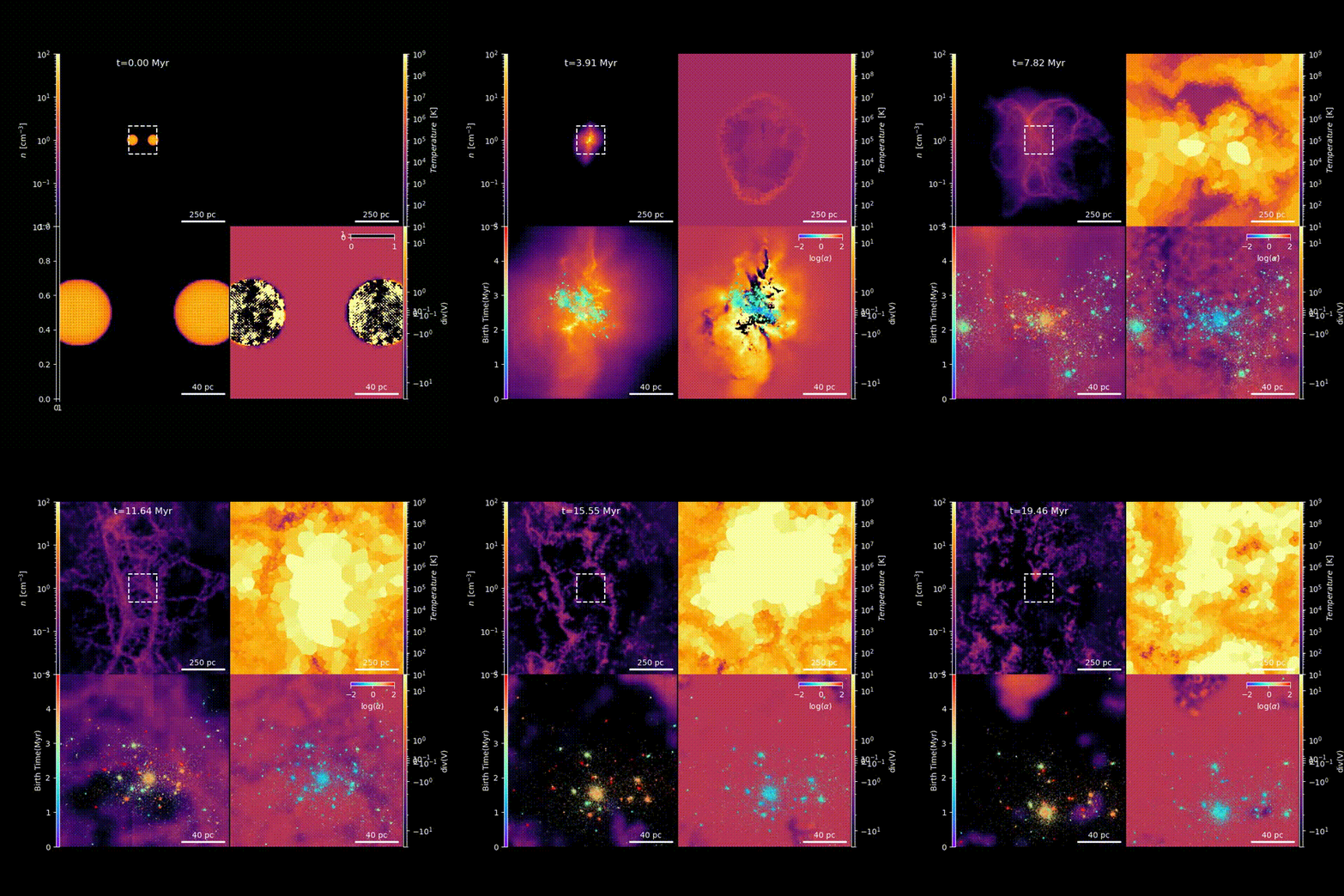
Cloud-Cloud Collision as a possible scenario for the formation of multiple stellar populations in globular clusters

In this work, we proposed a new promising scenario for the formation of multiple stellar populations in globular clusters. Cloud-Cloud Collision model could achieve 8̃0% 2P ratio in certain initial condition settings.

  • in Prep.

A new code for low-resolution spectral identification of white dwarf binary candidates

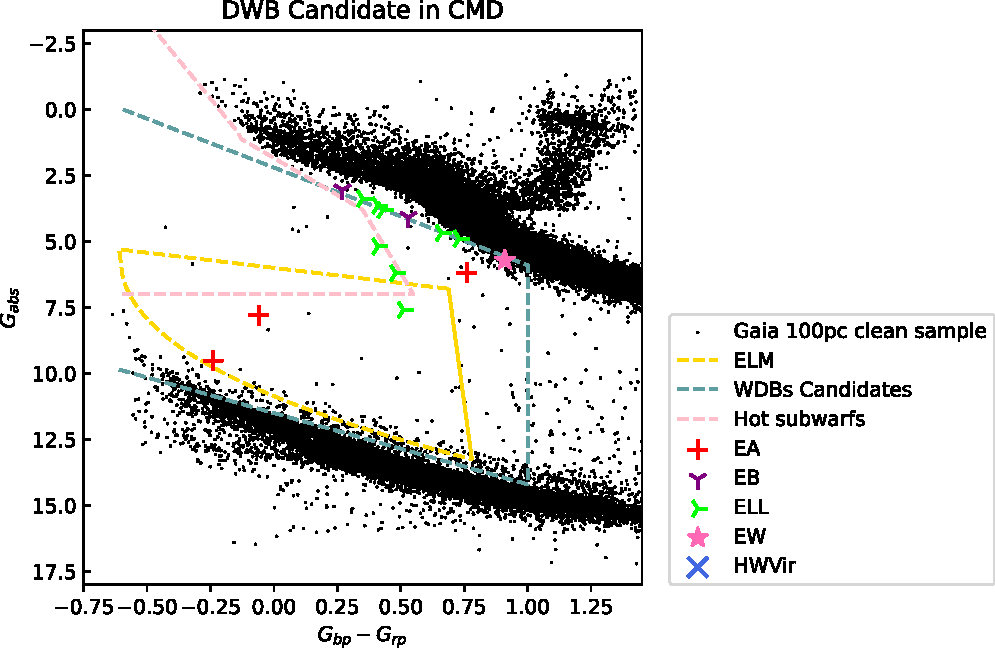
Close white dwarf binaries (CWDBs) are key to studying phenomena like type Ia supernovae. Precise parameter measurement is difficult due to low luminosity and complex orbits. We developed an ANN-based pipeline for spectral analysis, tested on two CWDBs and 14 candidates, aiding future stellar evolution and gravitational wave studies.

Co-Author Articles

"A magnetic white dwarf formed through a binary merger within 35 million years" . Astrophysical Journal Letters. 2025; 991(1):L7. DOI: 10.3847/2041-8213/adfec2

- "Revealing the Origins of Galactic Globular Clusters via Their Mg-Al Abundances". Astrophysical Journal Letters. 2025; 989(2):L37. DOI: 10.3847/2041-8213/adf748